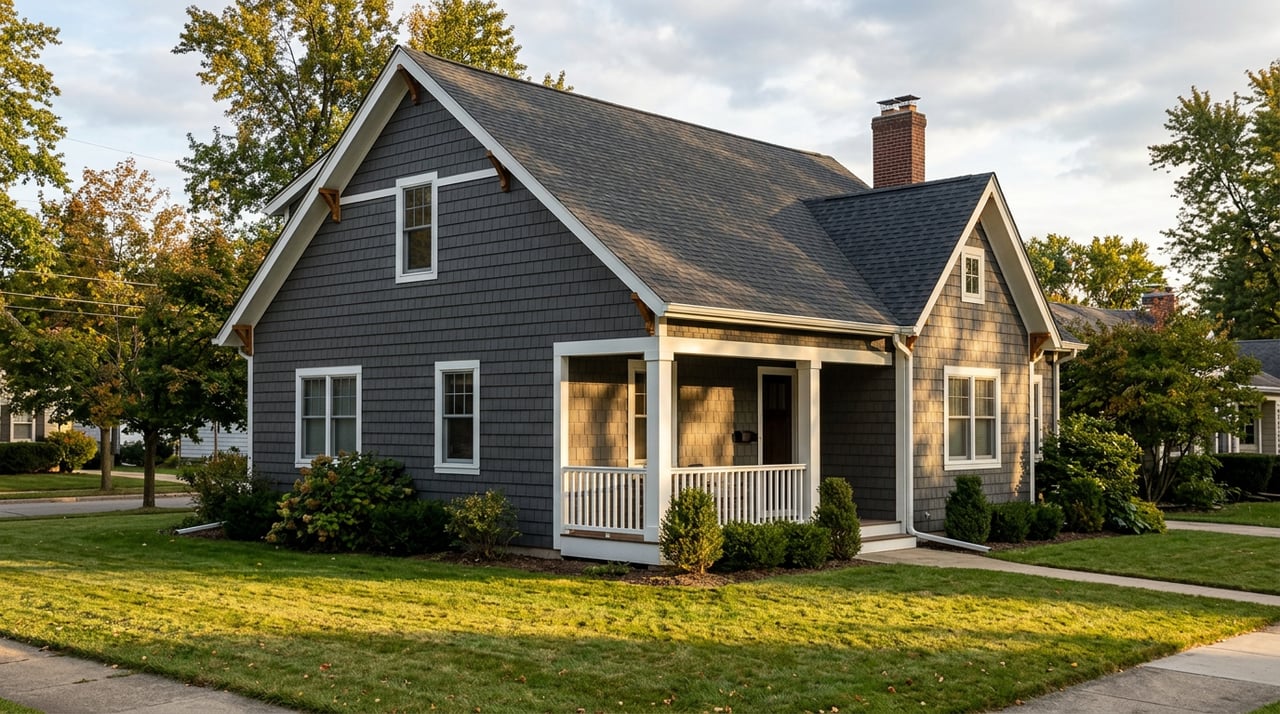
Scenic views and country charm welcome you to Yorktown, a place replete with history and culture
Yorktown, New York occupies a rare middle ground that few Hudson Valley suburbs can claim: it feels genuinely unhurried, yet it's never far from anything you need. Situated in Northern Westchester County about 38 miles from Midtown Manhattan, this is a town where Revolutionary War history meets mid-century architecture, and where protected parklands press right up against a surprisingly vibrant dining scene.
The town is technically a collection of five distinct hamlets: Yorktown Heights, Crompond, Jefferson Valley, Mohegan Lake, and Shrub Oak. Each has its own character. Together, they form a community that draws established professionals, young families relocating from the city, and long-time residents who have no intention of leaving.
What sets Yorktown apart from other Northern Westchester towns is the scale of what surrounds it. Because a significant portion of the town sits within the New York City watershed, high-density development is naturally limited. That means the green space isn't going anywhere, the views stay intact, and the quiet that drew people here in the first place is structurally protected. In a region where open land is increasingly rare, that's a meaningful distinction.
The median age hovers around 46, reflecting a community of established homeowners, though the town's ongoing redevelopment projects are actively beginning to attract a younger hybrid-work demographic. Yorktown was ranked the #8 safest community in New York State in 2026. For buyers weighing lifestyle alongside logistics, that combination is hard to replicate at this price point in Westchester.
History
Yorktown's identity was shaped by three defining forces: war, water, and suburbanization.
The land originally formed part of the vast Van Cortlandt Manor holdings and served as a "Neutral Ground" during the Revolutionary War, though the name was anything but accurate. In 1781, the Battle of Pine's Bridge was fought here, where the 1st Rhode Island Regiment, a unit composed of Black and Indigenous soldiers, made a heroic stand to defend a critical river crossing. That history is still present if you know where to look.
The mid-1800s brought a transformation no one anticipated. The construction of the New Croton Dam and Reservoir required entire villages to be relocated or permanently submerged to supply drinking water to New York City. The loss was real, but what remained were the sweeping reservoir views and protected forested hills that define the town's landscape today.
The arrival of the Putnam Division railroad in the late 1800s recast Yorktown as a summer retreat and dairy farming hub. Dutch Colonial and Federal-style farmhouses from that era still dot Crompond Road, a quiet reminder of the agricultural life that preceded suburban sprawl. The post-World War II boom brought the familiar wave of split-levels, Cape Cods, and colonial-style subdivisions as families moved north from the city, and large farm parcels were converted into neighborhoods that still characterize much of the town's residential fabric.
Today, Yorktown balances all of those layers: working farms turned nature preserves, railroad-era architecture alongside modern townhomes, and a downtown area currently undergoing its most significant revitalization in decades.
Location & Geography
Yorktown sits approximately 38 miles north of Midtown Manhattan in the northeastern corner of Westchester County. Its borders frame it neatly: Putnam County (Putnam Valley and Carmel) to the north, the Town of New Castle to the south, Somers and Cortlandt to the east, and Peekskill and the Hudson River corridor to the west.
The terrain is distinctly Lower Hudson Valley: rolling hills, rocky outcroppings, and significant water bodies created by the watershed infrastructure built over a century ago. A large portion of the town is protected land surrounding the New Croton Reservoir, which functionally caps density and keeps the landscape open. Franklin D. Roosevelt State Park adds another nearly 1,000 acres of hills, lakes, and forest to that equation.
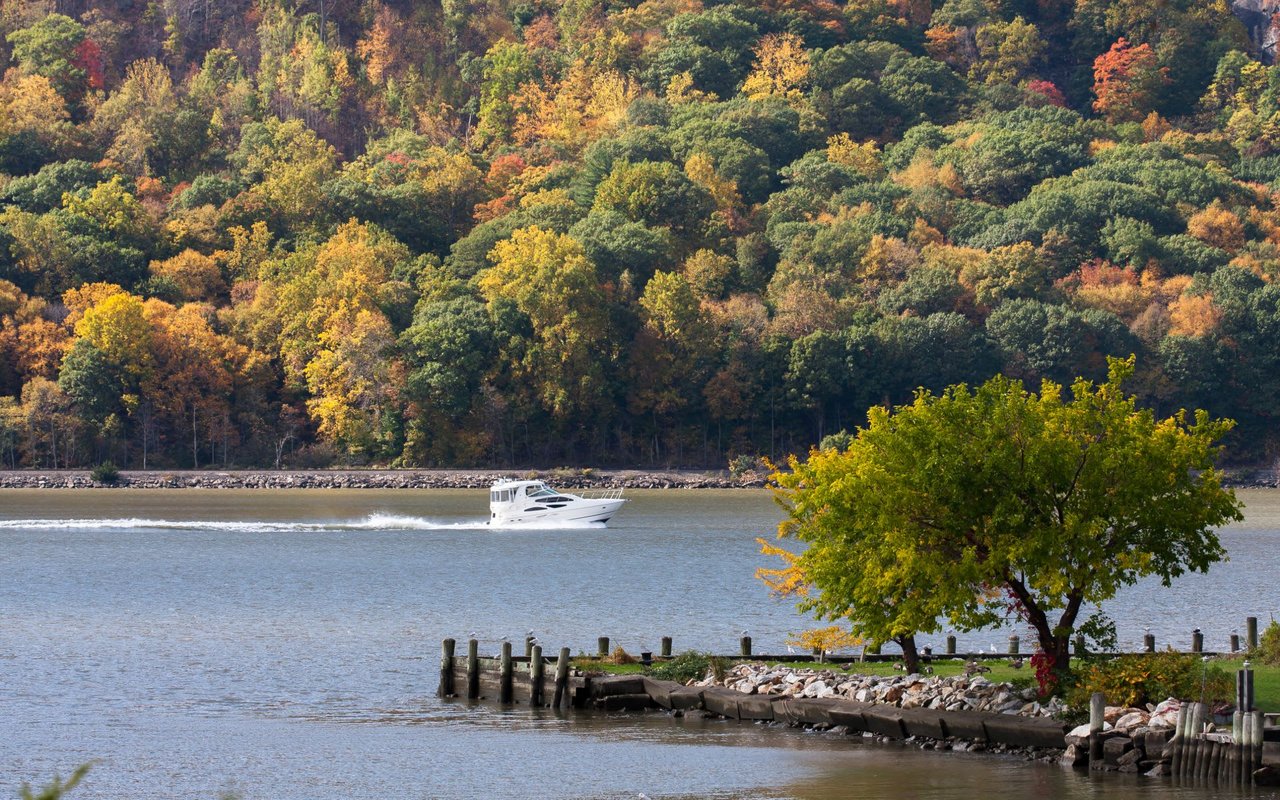
Yorktown experiences a humid continental climate. Winters are cold and frequently snowy, influenced by the elevation of the surrounding hills. Summers are warm and humid but typically a few degrees cooler than the city, thanks to the tree canopy and proximity to water. Fall is legitimately spectacular here: the dense deciduous forests of maple, oak, and birch make Yorktown a legitimate destination for leaf-peeping, not just a passing claim made by local tourism boards.
For buyers comparing Northern Westchester towns, the geography here is a genuine asset. The watershed protections that might once have seemed like a limitation are increasingly the reason people choose Yorktown.
Housing Market in Yorktown
As of early 2026, the Yorktown housing market is firmly a seller's market, driven by sustained demand and persistently low inventory.
The median sale price has reached approximately $814,000, reflecting meaningful year-over-year appreciation. In Yorktown Heights specifically, typical home values cluster around $690,000, appreciating at roughly 2.4% to 2.8% annually. That trajectory has been consistent, not speculative.
Inventory tells the real story. At any given time, there are often fewer than 50 active listings across all five hamlets combined. That scarcity has real consequences: approximately 62% of homes are selling over the asking price. Buyers should expect to pay around 100.6% of list price on average, and well-priced homes that meet the market squarely are going under contract in under two weeks. Average days on market runs between 32 and 49 days overall, which is relatively measured compared to the frenzied pace of 2021 and 2022, but don't mistake that for a slow market.
Higher mortgage rates have softened the most extreme bidding wars, but they haven't broken the fundamental supply-demand imbalance that keeps prices elevated. For sellers, conditions remain favorable. For buyers, preparation and pre-approval are non-negotiable.
Types of Homes Available
Yorktown's housing stock is more diverse than buyers often expect, particularly for a town of its size.
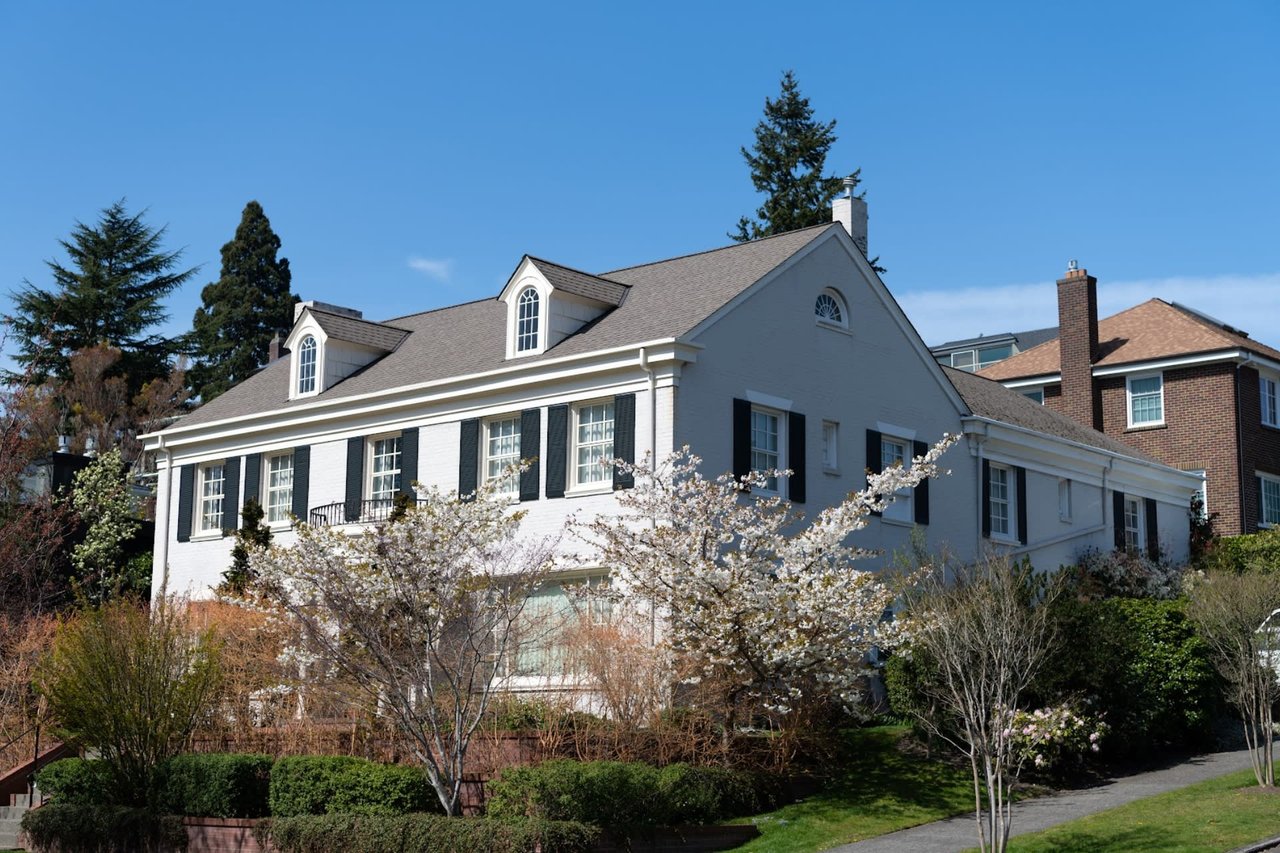
Single-family homes dominate the market. The post-war suburban boom left Yorktown with a deep inventory of Cape Cods, split-levels, and ranches, particularly in Shrub Oak and Yorktown Heights. Newer subdivisions offer larger 4- to 5-bedroom colonials on half-acre to one-acre-plus lots. At the upper end, custom-built estates and historic farmhouses in the more rural pockets near Teatown Lake Reservation and the reservoir properties represent some of the finest residential real estate in Northern Westchester.
Condominiums and townhomes are more prevalent here than in many comparable Northern Westchester towns. Jefferson Valley is home to several established condo complexes and townhome communities that serve as an accessible entry point into the market. Newer luxury townhome developments within Yorktown, such as those on Soundview Court, are commanding upwards of $1 million.
Rental housing is limited but strong, with median rents running between $2,700 and $3,300 for one- to two-bedroom units. The rental market benefits directly from the competitive buying environment: households that haven't secured a purchase often rent locally while they search.
Yorktown also has a well-developed 55+ and senior living sector, including age-restricted communities that allow long-time residents to downsize without leaving the town they've called home for decades.
Relocation Tips
Moving to Yorktown rewards those who do their research before signing anything.
The hamlet decision matters more than most buyers anticipate. Yorktown Heights is the commercial and civic center, with the most walkable concentration of shops, restaurants, and services. Mohegan Lake and Shrub Oak offer a quieter, more lakeside character with proximity to the Bear Mountain State Parkway. Crompond and Jefferson Valley sit in between, with solid access to both the mall corridor and residential quiet.
Commuter logistics require advance planning. There is no Metro-North station within Yorktown's boundaries. Most residents drive to either the Croton-Harmon station on the Hudson Line (15-20 minutes west) or the Katonah or Mount Kisco stations on the Harlem Line (about 15 minutes east). Station parking permits frequently have waitlists. Apply as early as possible, ideally the moment you have a signed lease or deed.
Infrastructure varies significantly by location. Many homes in the outlying hamlets operate on private well water and septic systems. The town center has municipal services, but the farther from the Heights you go, the more likely you are to encounter private systems. This isn't a dealbreaker, but it is due diligence you cannot skip.
The North County Trailway is not just a park amenity; it is a lifestyle. This paved multi-use path runs directly through town and connects south to the Bronx and north into Putnam County. Proximity to a Trailway access point is a legitimate quality-of-life factor that should be part of your home search.
Neighborhood Development Projects
Yorktown is in the middle of a meaningful "smart growth" period, converting underutilized commercial real estate into mixed-use and residential projects that are reshaping the northern end of town.
The Square at Yorktown is the most significant of these: a redevelopment of former department store space at the Jefferson Valley/Yorktown Center into over 700 residential units, paired with a community park, dog park, and fitness amenity spaces. Phase one is slated for completion in spring 2026. Paired with the Yorktown Reserve and Summit luxury multi-family buildings nearby, this cluster of projects is deliberately designed to introduce a more walkable, urban-adjacent feel to an area that has been car-dependent for decades.
AMS Yorktown, on the former Blue Book headquarters site at 800 East Main Street, is converting into 180 units of age-restricted (55+) housing while preserving over 26 acres of open space with walking trails and a clubhouse. This is exactly the kind of project Yorktown's "empty nester" population has needed for years: a reason to stay local when the family home becomes too much.
Underhill Farms is a more complex and consequential project: the revitalization of the historic Underhill estate into a mixed-use development featuring senior housing, townhomes, and retail. It's designed to function as a genuine extension of the Yorktown Heights hamlet center, which could significantly change the walkability and retail character of the downtown area if executed well.
The town has also secured a $10 million Downtown Revitalization Initiative grant to fund streetscaping, pedestrian safety improvements, and green infrastructure in the Heights. Expect visible upgrades through 2026 and into 2027.
Factors to Consider When Buying
Yorktown has genuine complexity beneath its suburban surface. Buyers who treat it like a generic Westchester purchase often learn the hard way.
The three-school-district reality is the most overlooked factor. Yorktown is served by three separate districts: Yorktown Central, Lakeland Central, and Croton-Harmon. A house on one side of a street can fall into a completely different district than the one directly across from it, with meaningful differences in school rankings, annual tax costs, and long-term resale value. Know your district before you fall in love with a property.
Property taxes require careful unpacking. For 2026, the town tax rate was held flat at $178.14 per $1,000 of assessed value. However, town taxes represent only about 12% of a homeowner's total tax bill. The school district levy is where the real number lives and where fluctuations occur. Always request the most recent school tax bill, not just the town assessment.
Septic replacement is not a minor expense here. Due to Yorktown's rocky terrain, a septic system replacement in Westchester can run $30,000 to $50,000. A load-and-dye test or camera inspection should be a non-negotiable contingency in any offer on a home with a private system.
Flood risk is real in specific pockets. Homes near the Mohegan Lake outlet and the New Croton Reservoir face moderate to severe flood risk. Verify the FEMA flood zone designation for any property you're considering; Zone X is common, but 500-year flood exposure exists in parts of Yorktown Heights. Climate data as of 2026 rates some areas at a "Severe" risk level.
Noise corridors are a locational factor worth mapping. Homes within roughly half a mile of the Taconic State Parkway or Route 202 offer excellent commuting convenience, but also persistent road noise. If quiet is a priority, factor this into your search radius.
Factors to Consider When Selling
For Yorktown sellers, timing, presentation, and pricing strategy each carry more weight than in a more balanced market.
The spring window is the prime selling season. Homes listed between March and May consistently net 10 to 15% higher premiums and sell roughly 20 days faster than those listed in December. If your timeline allows, holding until spring is typically worth the wait.
Stage your flexible square footage intentionally. The buyer pool arriving from New York City in 2026 is disproportionately focused on hybrid work. A fourth bedroom or finished basement staged as a dedicated home office converts faster and commands more than the same space presented as a guest room. Functional square footage is the current currency.
Strategic underpricing works here. Because 62% of Yorktown homes are selling over list price, a value pricing strategy (listing 3 to 5% below true market value) frequently generates competitive offers within days. This is not the market for pricing at your ceiling and waiting.
Buyer demographics have shifted. You are predominantly selling to millennial families and younger professionals relocating for the school districts. They want move-in ready and they research extensively before touring. Curb appeal photographs matter enormously. A garage door replacement or a modern front door can recoup over 200% of its cost at resale. Solar panels, heat pumps, and smart thermostats are increasingly commanding meaningful premiums as energy costs remain elevated.
Dining and Entertainment
Yorktown's food scene has evolved well past the pizza-and-diner expectations that follow many suburban Northern Westchester towns.
Peter Pratt's Inn is the clearest demonstration of how far the local dining culture has come: a farm-to-table restaurant operating inside a 1780s colonial tavern, offering an experience that would hold its own in most Manhattan neighborhoods. Hudson Valley Steakhouse handles the upscale occasion dining, while Pappous Greek Kitchen delivers consistently on authentic Mediterranean. For brunch, Wildberry Café is a local institution. Trailside Café serves the cycling crowd coming off the North County Trailway and does it well.
Yorktown has also become a location for the Wonder food hall concept, which offers delivery and dine-in access to menus from celebrity chefs including Bobby Flay and Marcus Samuelsson. It's an unexpected amenity for a Northern Westchester town of this size.
For evening entertainment, Yorktown Stage at the Albert A. Capellini Community Center produces professional-quality musicals and theatrical performances year-round. The Jefferson Valley Mall has pivoted toward experiential retail with a glow-in-the-dark mini golf venue and a cinema alongside its traditional retail. Quieter nights out tend to center on Hilltop Tavern or 314 Beer Garden, the latter drawing crowds with live music and food trucks through the warmer months.
Parks and Recreation
If this is a priority for your household, Yorktown is one of the strongest towns in all of Westchester.
Franklin D. Roosevelt State Park is the crown jewel: nearly 1,000 acres including a pool twice the size of an Olympic facility, disc golf, fishing, and extensive picnic areas. Turkey Mountain Nature Preserve offers the best view in town at its 831-foot summit, where on clear days you can see the Manhattan skyline to the south and the Bear Mountain Bridge to the west. Sylvan Glen Park Preserve, built on a former quarry site, gives trail runners and dog walkers something genuinely unique: massive granite boulders and over five miles of varied terrain.
The North County Trailway is perhaps the town's most valuable recreational asset for daily life. This paved multi-use path runs through the center of town, connects south to the Bronx and north to Brewster, and serves commuting cyclists, distance runners, and casual walkers equally well.
Granite Knolls Park is well regarded among mountain biking enthusiasts and includes the Tom Diana Recreation Complex with turf fields and a putting green. Sparkle Lake provides a local summer destination with swimming, fishing, and a small beach. Golfers have the championship-level Mohansic Golf Course (public) and the Valley Fields Par 3 for a more casual round.
Shopping
Yorktown functions as a regional commercial hub for Northern Westchester, which means residents have meaningful retail options without driving to White Plains.
Jefferson Valley Mall anchors the southern end of the town's retail corridor with over 90 stores, including Macy's and Dick's Sporting Goods, alongside specialty retail. The mall is actively evolving into a lifestyle center as part of the broader Jefferson Valley redevelopment. A new Fresh Market grocery store is one of the centerpiece additions, positioned to serve the incoming residential population surrounding the mall.
Yorktown Heights offers the more intimate, Main Street-style retail experience. The Triangle Center and Yorktown Green house an ACME Markets, T.J. Maxx, local jewelers, and gift boutiques. Route 202 and Crompond Road have a concentration of antique shops and home decor boutiques that reflect the town's "shop local" sensibility.
For groceries specifically, residents rotate between ACME, Fresh Market, and Turco's (now part of Uncle Giuseppe's), the last of which is worth the trip for its Italian deli counter, fresh pasta, and gourmet prepared foods alone. The Yorktown Farmers Market, held at Town Hall on Saturdays from spring through late fall, is a reliable source for Hudson Valley produce, local honey, and artisanal goods.
Local Culture
Yorktown's culture is best described as quietly proud. Residents value their privacy and the openness of the landscape around them, but they show up in significant numbers for the traditions that have defined the town across generations.
The Yorktown Grange Fair is one of the last genuine agricultural fairs remaining in Westchester, featuring livestock exhibits, tractor pulls, and blue-ribbon baking competitions. It draws crowds every year precisely because it is not trying to be anything other than what it has always been. The Yorktown Heritage Day parade and celebration, the St. Patrick's Day Parade, and the Holiday Electric Lights Parade each bring together fire departments, scout troops, local schools, and residents in the way that only communities with real civic investment can sustain.
Volunteerism is a structural part of how this town operates. The fire departments are volunteer-led. Library boards, environmental conservation groups, and school parent organizations all reflect a community that takes active ownership of its institutions. For buyers relocating from more transactional urban environments, this level of civic engagement can be one of the more pleasantly surprising discoveries about life in Yorktown.
Schools and Education
Education is one of the primary drivers of Yorktown's real estate values, and with good reason.
Yorktown Central School District is ranked #14 in Westchester County and #48 in New York State for 2026 by Niche. Yorktown High School scores 94.42 out of 100 by U.S. News & World Report, with near-100% proficiency in math and reading. The district runs a strong STEM curriculum and a well-regarded Science Research Program that prepares students for competitive college admissions.
Lakeland Central School District, which serves Shrub Oak and Mohegan Lake, holds the #30 ranking in Westchester and is notable for the Lakeland Copper Beech Middle School, one of the largest middle schools in New York State, known for its breadth of extracurricular and athletic programming.
Croton-Harmon Schools serve a small portion of Yorktown and are recognized for discovery-based learning and consistently high college readiness scores.
On the private side, St. Patrick's School (Pre-K through 8th grade) serves families seeking a faith-based option, and the Shrub Oak International School is a nationally recognized boarding and day school specializing in students on the autism spectrum. Well-regarded preschools include Sunshine Starts in the Triangle Center and Creative Kids Childcare, both following play-based and Reggio Emilia-inspired approaches. For higher education, Mercy University (Dobbs Ferry) and Pace University (Pleasantville) are within a 20-minute drive.
Commute and Accessibility
Yorktown is unambiguously car-dependent. There is no Metro-North station within town limits, and that is the single most important logistical fact a prospective buyer should internalize before committing.
The two primary commuting options to Grand Central Terminal are the Hudson Line at Croton-Harmon Station, a 15 to 20 minute drive west that offers frequent express service reaching Grand Central in roughly 46 to 55 minutes, and the Harlem Line at Katonah or Mount Kisco, approximately 15 minutes east and popular with residents in the Yorktown Heights corridor. Both are legitimate choices; your specific hamlet will often determine which makes more sense.
By car, Midtown Manhattan is approximately one hour under good conditions. White Plains is 20 to 25 minutes south. The Taconic State Parkway is Yorktown's primary north-south artery and the route most commuters rely on, while Route 202/35 handles east-west movement toward Peekskill and Somers.
The Bee-Line Bus Route 10 connects Yorktown Heights to the Croton-Harmon station for residents who prefer not to deal with station parking, though most commuters drive. Parking permits at both Croton-Harmon and Katonah carry waitlists; this is not a minor logistical detail.
Most Coveted Streets & Estates
Within Yorktown's five hamlets, certain micro-locations carry a distinct premium, shaped by lot size, privacy, water access, or proximity to the town's best amenities.
Properties along and near Teatown Road and the land bordering Teatown Lake Reservation represent some of the most sought-after real estate in Northern Westchester. These are quiet, wooded corridors where custom homes and historic farmhouses sit on generous parcels with genuine separation from neighbors. Buyers in this pocket are typically seeking privacy above all else.
The Soundview Court area has emerged as a benchmark for luxury townhome living within Yorktown, with newer developments regularly reaching and exceeding $1 million.
In Yorktown Heights proper, streets close to the North County Trailway access points and within walkable distance of the downtown plazas attract buyers who want the suburban feel without complete car dependence for every errand. As the Heights revitalization continues through 2026 and 2027, proximity to the downtown core is becoming a more meaningful price driver than it has been historically.
Mohegan Lake and Shrub Oak offer lakeside and heavily wooded residential corridors that appeal to buyers who prioritize natural surroundings and a quieter neighborhood pace over commercial convenience. Homes on the lake with direct water access are rare and command a meaningful premium when they come to market.
Why People Love Yorktown
Yorktown doesn't require much persuasion. It tends to make its case on its own terms.
The combination of preserved open space, top-performing schools, a strengthening restaurant scene, and a price point that remains more accessible than southern Westchester towns creates a compelling argument for buyers who have done their homework across the region. The watershed protections that limit development aren't a bureaucratic inconvenience; they are the structural guarantee that Yorktown will not become something unrecognizable ten years from now.
Residents stay because the town functions well at the human scale. Children bike to friends' houses. Neighbors know each other by name. Volunteer fire departments respond in minutes. The farmers market on Saturday morning runs into the afternoon hike and the post-trail dinner at a restaurant that would be perfectly at home in a Brooklyn neighborhood. That rhythm, sustained across all five hamlets despite meaningful differences in character, is what defines quality of life here.
For families relocating from New York City, Yorktown delivers the open space and school quality they came for without asking them to give up the culinary standards and cultural engagement they built their lives around. For long-time Westchester residents, the ongoing revitalization projects are making it easy to see a new chapter for a town that has always quietly known its own worth.
Work With the Nancy Kennedy Team
Navigating Yorktown's five hamlets, three school districts, watershed restrictions, and competitive seller's market requires local expertise that goes well beyond what a general Westchester agent can offer.
The Nancy Kennedy Team has deep roots in Northern Westchester and brings years of direct experience representing buyers and sellers across Yorktown's distinct neighborhoods. Whether you're searching for the right hamlet that fits your commuting pattern and lifestyle, preparing a home to perform in the spring market, or evaluating a specific property against Yorktown's unique infrastructure and tax considerations, the team brings the kind of informed, strategic counsel that only comes from genuinely knowing this market.
If you're considering a move to or from Yorktown, reach out to the Nancy Kennedy Team for a conversation. There's no obligation and no pressure: just honest guidance from advisors who live and work in the communities they represent.
Contact the Nancy Kennedy Team today and let's talk about what Yorktown can offer you.